Our work
From a cage back to the canopy.
We work to save the orangutan through rescue and rehabilitation, with an ultimate goal of releasing them back to the forest where they will be safe from human development, poaching and farming.

The journey
Rehabilitation is a curriculum, not a rescue photo.
Every orangutan that reaches us has lost the mother who would have spent eight years teaching them how to survive. Replacing that takes years.
- 01
Rescue
Confiscations from the pet trade, orphans found after fires, adults displaced by clearing. Every arrival begins with quarantine and a full veterinary workup.
- 02
Forest School
Dedicated nannies teach them what a mother would have: what to eat, how to climb, how to build a nest, how to be wary of people. It takes years, not months.
- 03
Pre-release island
A final unsupervised test on a forested island. Candidates must prove they can feed and shelter themselves without any human support at all.
- 04
Release
Into protected forest, then monitored from the ground. 556 orangutans have made it all the way through and are living wild today.

Where the work happens
Two sanctuaries and a peatland.
BOS Australia funds the Borneo Orangutan Survival Foundation, which runs the biggest orangutan reintroduction program in the world and cares for more than 350 orangutans.
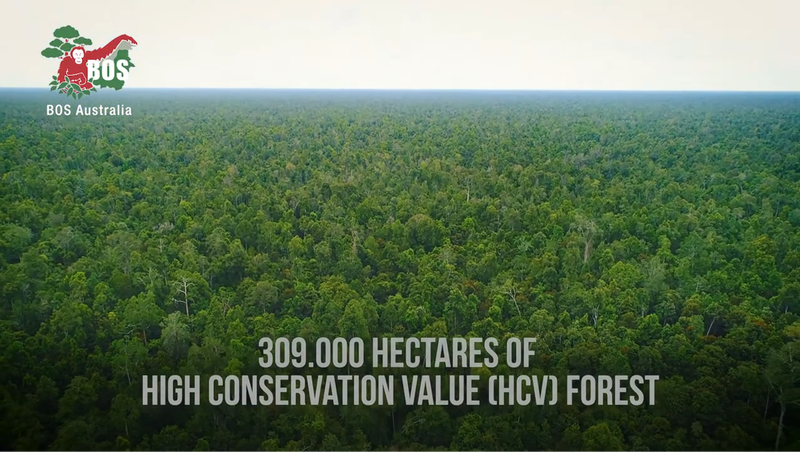
Mawas Conservation Program
Central Kalimantan
A peatland conservation area protecting the habitat of around 3,000 wild orangutans — protection at landscape scale.
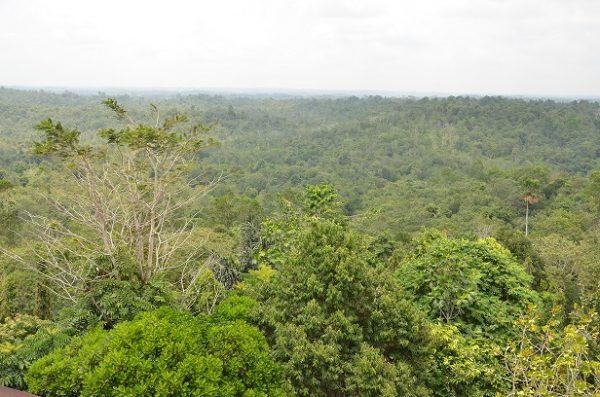
Samboja Lestari
East Kalimantan
A reforested reintroduction centre built on degraded land, now home to rehabilitating orangutans and a sun bear sanctuary.
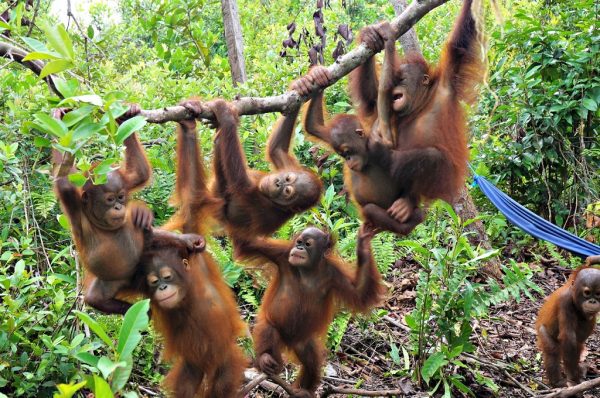
Nyaru Menteng
Central Kalimantan
A reintroduction centre where orphaned orangutans move through Forest School, learning to climb, forage and nest before release.
Beyond rehabilitation
Saving the orangutan means saving the forest.
Releasing an orangutan is only worth doing if there is somewhere safe to release them into.
Habitat restoration
Degraded and burnt land is replanted so that released orangutans have forest to return to. Samboja Lestari itself was built on land stripped bare before the work began.
Mawas peatland conservation
A conservation area in Central Kalimantan protecting the habitat of around 3,000 wild orangutans — protection at landscape scale rather than one animal at a time.
Sun bear sanctuary
Samboja Lestari also cares for rescued Malayan sun bears, confiscated from the same illegal trade that takes orangutans.
Working with communities
Education and support for forest-dependent communities, because long-term protection depends on the people who live alongside the forest.